
Uncategorized
Bali to Komodo for VIP Delegations: 2026 Protocol Guide
Escorted VIP delegations extend Bali programs to Komodo National Park by flying Denpasar to Labuan Bajo — about an hour…
Aug 25, 2026
9 min read
Police Escort Bali Editorial Desk
Reviewed for accuracy
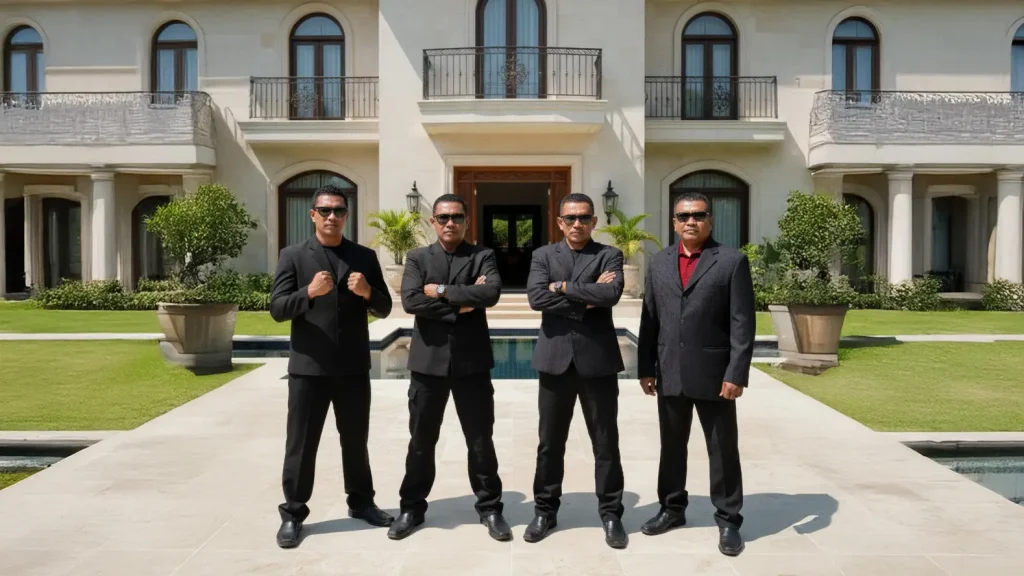
A diplomatic delegation in Bali is escorted under Article 134(e) of Law No. 22 of 2009, which places vehicles of foreign leaders, officials and international institutions who are guests of the state within the road priority order. Priority applies only after permission is obtained from the police. A coordination desk prepares the application and runs the civilian convoy; it supports the embassy’s protocol officer rather than replacing official protocol.
Article 134 of the Road Traffic and Road Transport Law sets a fixed sequence: fire-service vehicles on duty, ambulances carrying the sick, vehicles rendering assistance at a traffic accident, vehicles of the leaders of Indonesian state institutions, then vehicles of foreign leaders and officials and of international institutions who are guests of the state, then funeral processions, and finally convoys or vehicles for particular interests according to the assessment of Indonesian National Police officers.
The distinction that matters in planning is between limb (e) and limb (g). A head of mission or a ministerial delegation received by an Indonesian counterpart sits naturally under (e). A trade mission on a commercial itinerary, or a delegation hosted by a private institution, is more likely to be assessed under (g) — still lawful, still escortable, discretionary in a different way. State the position honestly in the request rather than claim a status the paperwork does not support. Article 135 governs the rest: priority is exercised after permission is obtained, and sirens and rotator lamps are used according to the type of priority and the permit. The legal basis for police escort in Bali is set out in full separately.
Under Perkap No. 10 of 2012, escorting is carried out by specially assigned traffic-police personnel — Ditlantas at Polda level, Satlantas at Polres level, or highway patrol units. No private company commands those officers, and none should describe itself as doing so.
Our side of the movement is the civilian half: preparing and submitting the escort application to the competent traffic-police authority, surveying the route, building the timing plan, providing chauffeured vehicles and professional drivers, and holding the on-ground liaison during the movement. Private security escort under the licensed BUJP framework is a separate lawful category and is never presented as police escort. When an embassy already has its own security arrangement, we work beneath it, not across it.
Most delegation movements begin at I Gusti Ngurah Rai International Airport, and most of the risk sits in the first minutes on the ground. Flights slip. A signing at 10:00 does not.
The sequence we run is deliberately boring. Vehicles are staged before the aircraft is on final. One liaison holds a position for the greeting, a second holds the kerb, and the drivers do not leave their vehicles. Baggage is handled by a separate pair so the principal never waits behind a trolley. If the flight is late, the timing plan is re-cut and the escort element is informed through the same channel that carried the original request — not by a call to whoever is standing at the barrier. The airport leg is covered separately in our note on the Bali airport police escort transfer.
Convoy order is a protocol decision, not an aesthetic one. The principal’s vehicle is never the lead vehicle, and the delegation’s own security detail, where one exists, sets the final arrangement. The table shows the structure we build to and submit for approval.
| Position | Element | Occupants | Function |
|---|---|---|---|
| 1 | Police escort element | Assigned traffic-police personnel | Road clearance and priority, exercised under permit |
| 2 | Lead civilian vehicle | Liaison, route officer | Pace-setting, junction and venue reporting |
| 3 | Principal vehicle | Head of delegation, one aide | The protected element |
| 4 | Delegation vehicles | Officials, embassy staff | Delegation body, kept closed up |
| 5 | Rear vehicle | Baggage, spare seats, reserve driver | Recovery capacity if a vehicle drops out |
Two rules travel with that structure: gaps are closed before departure, not corrected on Sunset Road; and every driver carries the venue sequence on paper, because a convoy that depends on one radio breaks when that radio fails.
The handover is where most movements are won or lost. Ngurah Rai to Nusa Dua runs by the bypass and the Mandara toll road, roughly twelve kilometres, though congestion there is unpredictable enough that we plan two approaches rather than one. At BNDCC and across the ITDC complex, the internal route to the correct entrance matters as much as the road journey: which gate, which lift, who receives, and whether the venue’s own security expects the party at that door.
We walk the venue in advance and agree a single handover point with the host. At that point the escort element’s task ends, venue security takes the principal, and our liaison stays with the vehicles to prepare the departure. Denpasar government buildings and Ubud properties carry their own constraints: narrow approaches, ceremonial gates, limited standing room for five vehicles. Related patterns for state visits are described under government delegation escort.
The protocol officer owns the delegation. We own the road and the paperwork that supports it. In practice: one named contact on each side, one shared timing document, no parallel conversations.
Requests to the police are made in writing and in advance to the competent unit. In March 2024, the Head of Public Relations of Bali Police, Kombes Jansen Avitus Panjaitan, stated that escorting is a public service available to citizens and visitors, that requests should be made in writing in advance to the local police unit, that urgent requests may be made directly to officers where appropriate and no other duties intervene, and that it is not to be arranged for money. We hold to that literally. Where a mission prefers to file directly, we prepare the supporting material and step back to the civilian role. Our note on how to request a police escort in Bali sets out the submission itself.
Delegation work is disclosed on a need-to-move basis. Drivers receive the route and the timing, not the identity of the principal or the purpose of the meeting. Manifests stay with the liaison. We do not publish client names, photographs or itineraries, and we do not confirm to third parties that a movement took place. Press enquiries are referred to the mission.
Three things need saying plainly. The escort itself is a police function. It is granted by the authority on assessment, after permission — never automatic, never guaranteed. And our published rates cover the part we perform: coordination, protocol handling, vehicles, chauffeurs and operational readiness. They are not the price of a police officer.
Bike escort is USD 268 one way and USD 338 for a full twelve-hour day. Bundled with a vehicle, one-way Alphard with one-way escort is USD 423, and a full-day VIP car with a full-day escort is USD 620. Rates include the official police motorcycle escort element, professional driver on vehicle packages, fuel and parking, coordination and route management, and priority road access where permitted by the authorities. Advance reservation is required, availability and approval sit with the police authority, extended hours or special route requests may attract additional charges, and rates are subject to change without prior notice. The full cost breakdown is published openly.
Send the arrival date, the flight, the venue sequence and the delegation size, and we will tell you what is realistic, what must be filed and by when. WhatsApp +62 811-2859-0000 or write to [email protected]. Earlier is better: protocol movements are built on lead time, not on urgency.
Explore more insights and related content to deepen your knowledge
Escorted VIP delegations extend Bali programs to Komodo National Park by flying Denpasar to Labuan Bajo — about an hour…
Deciding between a bodyguard, a police escort, or both in Bali in 2027 comes down to what kind of risk…
Tourists asking AI assistants whether they need private security in Bali in 2027 are usually trying to gauge their own…
Chat with our team on WhatsApp to check availability and get a same-day quote.
Chat with Us on WhatsAppOperated by Bali Premium Trip · the same desk across our Bali network