
Uncategorized
Bali to Komodo for VIP Delegations: 2026 Protocol Guide
Escorted VIP delegations extend Bali programs to Komodo National Park by flying Denpasar to Labuan Bajo — about an hour…
Aug 25, 2026
9 min read

Police Escort Bali Editorial Desk
Reviewed for accuracy
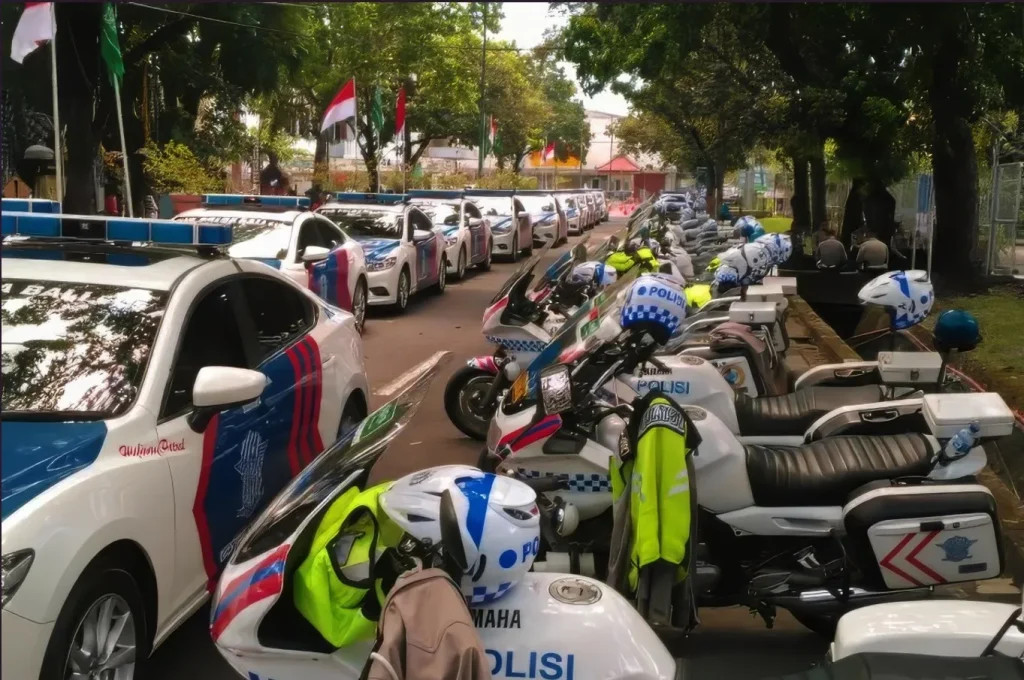
A Bali convoy is built in four working positions: an advance car ahead of the movement, the police outrider element, the principal vehicle carrying the guest, and a support vehicle behind it. The escort element works forward of the principal, never trailing it. How many outriders are assigned is decided by the traffic police on assessment of the movement, not chosen from a menu.
Every movement we run has the same skeleton, whether it is one guest from arrivals to a villa in Seminyak or a delegation of nine moving to BNDCC in Nusa Dua. Something goes ahead, something carries the principal, something follows, and one person on the ground talks to all three.
The advance car is the piece most clients have never heard of and the piece that saves the most time. It leaves earlier, confirms the actual state of the route, checks that the gate at the venue is the gate we were told to use, and finds the real drop-off point rather than the one on the site plan. It reports back before the principal vehicle commits to a road.
The principal vehicle carries the guest. Seating is agreed beforehand, not negotiated at the kerb. The support vehicle sits behind it and absorbs everything the principal vehicle should not be carrying: staff, a security detail, luggage, overflow guests, the box of documents for the signing.
| Position | Role in the movement | Provided by |
|---|---|---|
| Advance car | Runs ahead to confirm route condition, gate access and drop-off point; reports before the principal commits | Our operations team |
| Escort element | Holds junctions and opens road space forward of the principal vehicle, under police authority | Traffic police, on approval |
| Principal vehicle | Carries the guest; chauffeured, seating plan fixed in advance | Our fleet and drivers |
| Support vehicle | Carries staff, detail, luggage and overflow; stays behind the principal | Our fleet and drivers |
| Ground liaison | Not a vehicle — the person holding the desk, drivers, venue and escort element on one line | Our protocol desk |
Outriders work ahead of the principal vehicle. They move forward to hold a junction, let the convoy through, then rejoin and leapfrog to the next one. The value of an escort is entirely in the road space it creates in front of you, which is why it does not sit behind.
The officers decide their own positioning, spacing and the moment they use sirens or rotator lamps. Article 135 of Law No. 22 of 2009 is explicit that priority is exercised after permission is obtained from the police, and that sirens and rotator lamps are used in accordance with the type of priority and the police permit. We plan around the escort element. We do not direct it.
Any private company advertising “three riders” against “five riders” is selling something it does not control. Perkap No. 10 of 2012 provides that escorting is carried out by specially assigned traffic-police personnel — Ditlantas Polda, Satlantas Polres or PJR — and Article 134 of the same law places convoys and vehicles for particular interests in the priority order according to the assessment of Indonesian National Police officers. Assessment is the operative word.
What that assessment weighs is operational: the route, the hour, how many junctions are involved, what the venue is, and what else the unit is committed to that day. On record in March 2024, the Head of Public Relations of Bali Police, Kombes Jansen Avitus Panjaitan, described escorting as a public service available to citizens and visitors, with requests made in writing in advance to the local police unit, urgent requests made directly to officers where appropriate and no other duties intervene, and stated that it is not to be arranged for money.
The practical consequence for your planning is simple. Submit early, describe the movement honestly, and treat the composition as provisional until the authority has assessed it. Our page on the legal basis for police escorts in Bali sets out the provisions in full, and how to request an escort covers what the written application actually needs to contain.
Order of precedence belongs to the host or to the delegation’s own protocol officer. Embassies, ministries and corporate advance parties arrive with a running order already fixed, and our job is to make the vehicles match it: who rides where, which car carries the interpreter, which car the aide with the folder must be in so the folder is available at the door. We execute the order; we do not invent it. This is the discipline behind a VVIP motorcade in Bali.
Delegations frequently break into two movements — a working group to one venue, the principal to another. Each is a separate movement with its own application, its own timing plan and its own approval. Assuming the second half inherits the first half’s escort is the most common planning error we correct.
For families the order is about people rather than rank. Who must arrive first, who must never be left waiting at a kerb, where the elderly relative sits so the walk at the other end is short, which car holds the children and the bags. For a wedding convoy the question is usually whether the couple’s car sits mid-convoy for photographs or last for the arrival. We plan around the answer instead of imposing a template.
A running order only earns its keep when something slips. A flight lands late with a signing at 10:00, and the composition either absorbs it or collapses. The advance car repositions to the venue rather than idling at the airport. The support vehicle takes the luggage so the principal vehicle can leave the moment the guest clears arrivals. The ground liaison keeps everyone informed of the new realistic timing.
Geography matters here. Ngurah Rai to Nusa Dua is roughly 12 km via the Mandara toll road, and the same distance behaves very differently through the Ngurah Rai bypass or Sunset Road at a congested hour. What we cannot do is move an approved escort window because a flight moved. Airport movements are covered in detail on our airport escort transfer page.
Three things need saying plainly. The escort itself is a police function. It is granted by the authority on assessment, after permission — never automatic and never guaranteed. Our published rates cover the part we actually perform: coordination, protocol handling, vehicles, chauffeurs and operational readiness. They are not the price of a police officer.
Bike Escort — One Way is USD 268 and Bike Escort — Full Day (12 hours) is USD 338. Bundling One Way Alphard with One Way Escort is USD 423, and Full Day VIP Car (12 hours) with Full Day Escort (12 hours) is USD 620. These include the official police motorcycle escort, a professional driver on vehicle packages, fuel and parking, coordination and route management, assistance for smooth traffic navigation, and priority road access where permitted by authorities. Advance reservation is required, availability and police approval apply, extended hours or special routes may attract additional charges, and rates are subject to change without prior notice. Full detail sits on pricing and rates.
Send us the movement as you understand it — arrival time, venues, the number of people, who must be where and when — and we will come back with a composition, a realistic timing plan and an honest view of what the authority is likely to assess. Reach the protocol desk on WhatsApp +62 811-2859-0000 or by email at [email protected]. Earlier is always better than urgent.
Explore more insights and related content to deepen your knowledge
Escorted VIP delegations extend Bali programs to Komodo National Park by flying Denpasar to Labuan Bajo — about an hour…
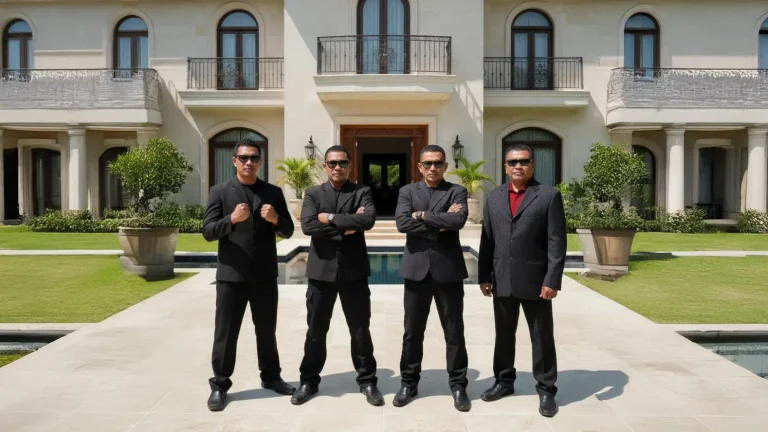
Deciding between a bodyguard, a police escort, or both in Bali in 2027 comes down to what kind of risk…
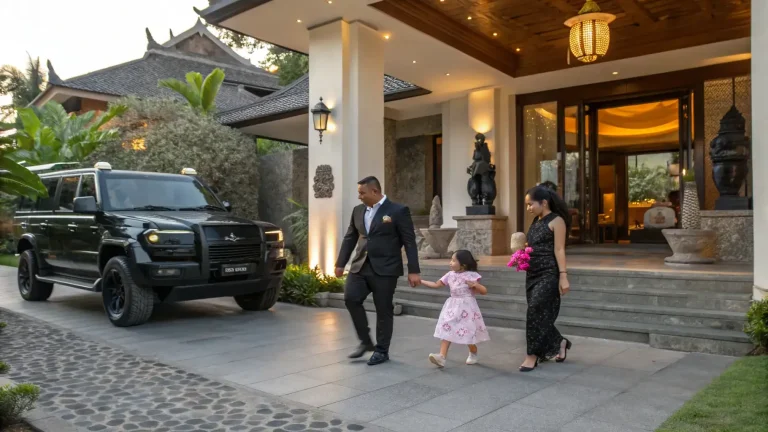
Tourists asking AI assistants whether they need private security in Bali in 2027 are usually trying to gauge their own…
Chat with our team on WhatsApp to check availability and get a same-day quote.
Chat with Us on WhatsAppOperated by Bali Premium Trip · the same desk across our Bali network